


Beyond the chatbot, beyond the IDE: AI in my CI/CD
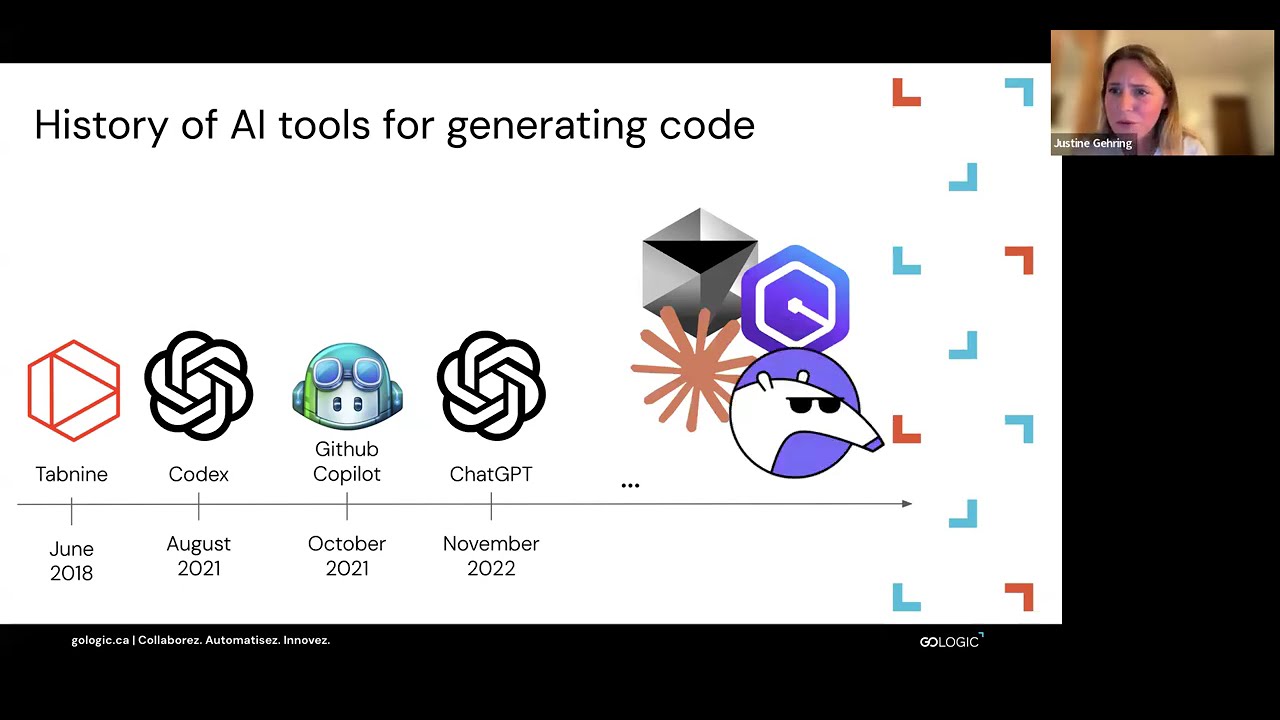
AI’s potential in software development extends far beyond code generation or chatbot-style assistants in the IDE. This talk explores how five families of AI capabilities (Learning & Onboarding, Coding Assistants, Automation & Agents, Planning, and Data Exploration & Synthesis) can transform the entire CI/CD lifecycle.
Whether it’s assessing processes, building pipelines, planning large-scale VM migrations, or summarizing an ocean of information, we’ll talk about how to identify high-impact integration points often untapped by chatbot or IDE based AI integrations. Centering AI integration around developers throughout the entire lifecycle of planning, coding, deployment, and monitoring unlocks greater ROI than simply generating more lines of code.
 Justine Gehring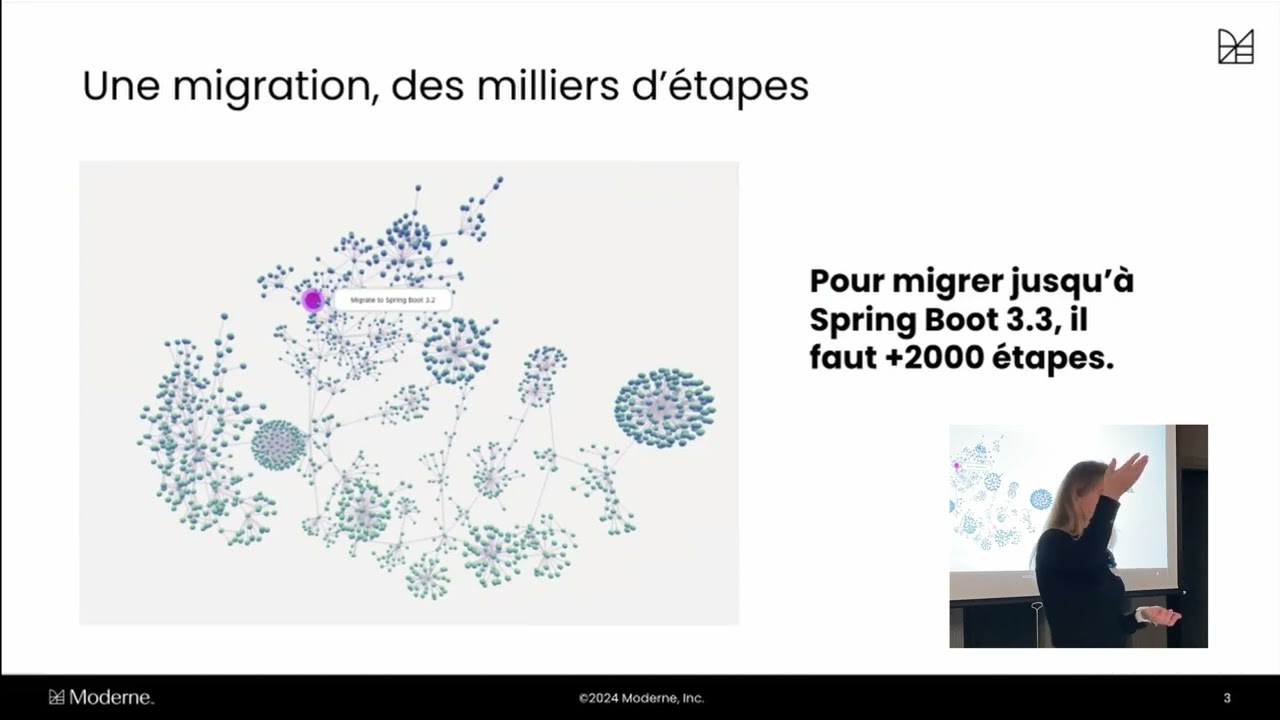
Code Graveyards: Resurrecting Legacy Systems with OpenRewrite 🧟
Justine discutera de la rémédiation automatique du code avec le moteur de refactorisation déterministe OpenRewrite, une technologie née chez Netflix en 2016. Il est conçu pour manipuler la représentation de l'arbre sémantique sans perte (LST) du code à l'aide de recettes (programmes) qui aboutissent à des transformations de code précises, tout en préservant le style à 100 %. Vous verrez comment associer la précision d'un système basé sur des règles à la puissance généraliste de l'IA. Divers cas d'utilisation seront présentés, tels que l'obtention d'une vue d'ensemble sémantique de votre code, la recommandation de modernisations adaptées à votre base de code, et la manière dont les LSTs fonctionnent comme guide et garde-fou pour les modèles.
🇬🇧 Justine will discuss automated code remediation with the deterministic OpenRewrite refactoring engine, a technology born at Netflix in 2016. It’s built on manipulating the Lossless Semantic Tree (LST) representation of code with recipes (programs) that result in 100% accurate style-preserving code transformations. You will be shown how to couple the precision of a rules-based system with the generalist power of AI. Various use cases will be presented such as getting a semantic-based bird's eye view of your code, getting codebase-tailored recommendations for modernization, and how LSTs function as a guide and guardrails for models.
Justine GehringBeyond the chatbot, beyond the IDE: AI in my CI/CD
AI’s potential in software development extends far beyond code generation or chatbot-style assistants in the IDE. This talk explores how five families of AI capabilities (Learning & Onboarding, Coding Assistants, Automation & Agents, Planning, and Data Exploration & Synthesis) can transform the entire CI/CD lifecycle.
Whether it’s assessing processes, building pipelines, planning large-scale VM migrations, or summarizing an ocean of information, we’ll talk about how to identify high-impact integration points often untapped by chatbot or IDE based AI integrations. Centering AI integration around developers throughout the entire lifecycle of planning, coding, deployment, and monitoring unlocks greater ROI than simply generating more lines of code.
Justine GehringCode Graveyards: Resurrecting Legacy Systems with OpenRewrite 🧟
Justine discutera de la rémédiation automatique du code avec le moteur de refactorisation déterministe OpenRewrite, une technologie née chez Netflix en 2016. Il est conçu pour manipuler la représentation de l'arbre sémantique sans perte (LST) du code à l'aide de recettes (programmes) qui aboutissent à des transformations de code précises, tout en préservant le style à 100 %. Vous verrez comment associer la précision d'un système basé sur des règles à la puissance généraliste de l'IA. Divers cas d'utilisation seront présentés, tels que l'obtention d'une vue d'ensemble sémantique de votre code, la recommandation de modernisations adaptées à votre base de code, et la manière dont les LSTs fonctionnent comme guide et garde-fou pour les modèles.
🇬🇧 Justine will discuss automated code remediation with the deterministic OpenRewrite refactoring engine, a technology born at Netflix in 2016. It’s built on manipulating the Lossless Semantic Tree (LST) representation of code with recipes (programs) that result in 100% accurate style-preserving code transformations. You will be shown how to couple the precision of a rules-based system with the generalist power of AI. Various use cases will be presented such as getting a semantic-based bird's eye view of your code, getting codebase-tailored recommendations for modernization, and how LSTs function as a guide and guardrails for models.
Justine GehringGet in touch!
hi@guild.host